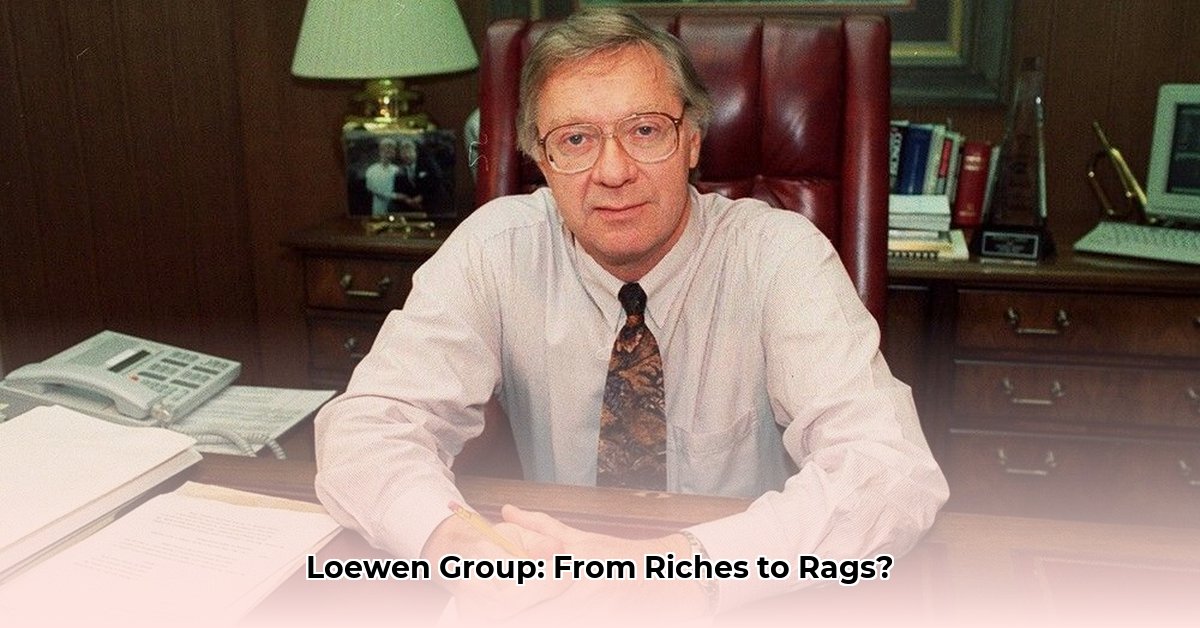
Ray Loewen's ambition to create the world's largest funeral home empire resulted in the Loewen Group's meteoric rise and spectacular fall. This case study examines the company's trajectory, dissecting the strategic decisions, legal battles, and financial performance that shaped its fate, offering valuable insights for businesses today. We will explore how aggressive expansion, coupled with a lack of robust risk management, led to a catastrophic collapse, ultimately wiping out a substantial portion of the Loewen Group's net worth.
The Loewen Group's Ascent: A Strategy of Rapid Acquisition
Loewen's initial success stemmed from a strategy of aggressive expansion. Acquiring hundreds of smaller funeral homes across North America, the company experienced rapid growth. This rapid acquisition fueled an impressive, albeit unsustainable, surge in net worth. However, this rapid growth created vulnerabilities. The immense size of the sprawling organization proved challenging to manage effectively, and the relentless pursuit of expansion overshadowed crucial aspects like financial planning and risk assessment. Could this rapid, debt-fueled growth have been maintained indefinitely? The events that followed strongly suggest “no.” The speed of acquisitions outpaced the corporation's capacity for effective integration and control. This strategic imbalance proved to be a pivotal factor in the company's ultimate demise.
The O'Keefe Lawsuit: A Turning Point
The O'Keefe lawsuit served as a devastating catalyst in the Loewen Group’s downfall. What began as a minor contractual dispute escalated into a protracted and costly legal battle costing hundreds of millions of dollars. An initial jury award of $500 million (subsequently reduced to $175 million in a settlement) decimated the company's net worth, illustrating the significant vulnerabilities inherent in its business model. The lawsuit’s staggering cost wasn't just financial; it exposed critical flaws in Loewen's legal risk management strategy and overall business practices. Experts suggest that inadequate legal counsel played a significant role in the case’s outcome and the substantial punitive damages. The magnitude of this award highlights the potential consequences of neglecting robust internal controls and failing to prioritize ethical considerations in business dealings. How could such a large, seemingly successful company be so swiftly brought to its knees by a single lawsuit? The answer lies in its risk management shortcomings, which dramatically outweighed any potential gains from fast expansion.
Ethical Considerations and Strategic Partnerships
Loewen's attempt to partner with the National Baptist Convention, while aimed at market expansion, proved counterproductive. This partnership, intended as a strategic move, introduced ethical ambiguities in contracts and dealings, exacerbating the legal backlash the company faced. It underscores the critical relationship between ethical business practices and long-term success. The lack of due diligence in terms of risk assessment related to this partnership is evident, suggesting the company prioritized short-term gains over long-term sustainability. The resulting reputational and legal damages significantly impacted the Loewen Group's net worth and stability. How did a seemingly shrewd business move transform into another contributor to the company's downfall? An inadequate assessment of potential ethical conflicts and downstream risks was a key factor.
Financial Performance and the Cost of Poor Judgment
The Loewen Group's narrative highlights the interconnectedness of financial performance, strategic planning, and ethical conduct. Unchecked ambition, devoid of a solid ethical framework and robust risk management, led to devastating consequences. The company's failure provides a compelling cautionary tale for businesses of all sizes. The fluctuating net worth of the Loewen Group demonstrates the volatility inherent in an unrestrained acquisition strategy, especially when combined with weak internal controls and ethical grey areas. What can we learn from the Loewen Group's experience to improve our own business strategies? It is essential to prioritize meticulous planning, ethical practices, and proactive engagement with risk assessment.
Key Contributing Factors to the Loewen Group's Demise
The following table summarizes the major factors contributing to the Loewen Group's collapse:
| Factor | Impact | Mitigation Strategies |
|---|---|---|
| Rapid Acquisition Strategy | Created an unwieldy company vulnerable to legal challenges and operational inefficiencies. | Slower, more considered growth; thorough due diligence; improved integration processes; strategic financial planning. |
| Inadequate Risk Management | Lack of internal controls and legal safeguards exposed the company to significant legal and financial risks. | Robust internal controls; comprehensive risk assessments; expert legal counsel; ethical compliance programs. |
| Ethical Concerns | Perceived unfair business practices fuelled litigation and damaged the company's reputation. | Strict adherence to ethical standards; transparent dealings; independent ethical reviews; robust compliance systems. |
| Unforeseen Legal Fallout | The O'Keefe lawsuit's outcome far exceeded expectations, resulting in a devastating financial blow. | Proactive legal risk management; strong legal representation; alternative dispute resolution strategies. |
The Loewen Group's legacy offers invaluable lessons in risk management, strategic planning, and ethical business practices. While the specific lessons Ray Loewen learned remain unclear, his story serves as a powerful illustration of the potential consequences of ambition unchecked by sound business principles. The company's fluctuating net worth underscores the crucial importance of long-term strategic vision, ethical conduct, and proactive risk mitigation.